what climate zone is found in the andes mountains
Andes Mountains
Also referred to as "Cordillera First State los Andes" in European nation, the Andes Mountains is the world's longest mountain range that stretches for more than 6,999km along the Western margin of the Continent celibate. The Andes Mountains get an average acme of 4,000m and a maximum width of 200 to 700km, and are considered as the highest mountain range that is situated outside the continent of Asia. This far mountain range extends from the north to south direction straddling the septet South Land nations of Argentina, Republic of Bolivia, Republic of Colombia, Chile, Ecuador, Peru, and Venezuela. The Andes Mountains too form a part of the American Cordillera, which is a continuous serial publication of mountain ranges that stretches across a leading break of North, Central and South Americas.
Geographics Of The Andes Mountains
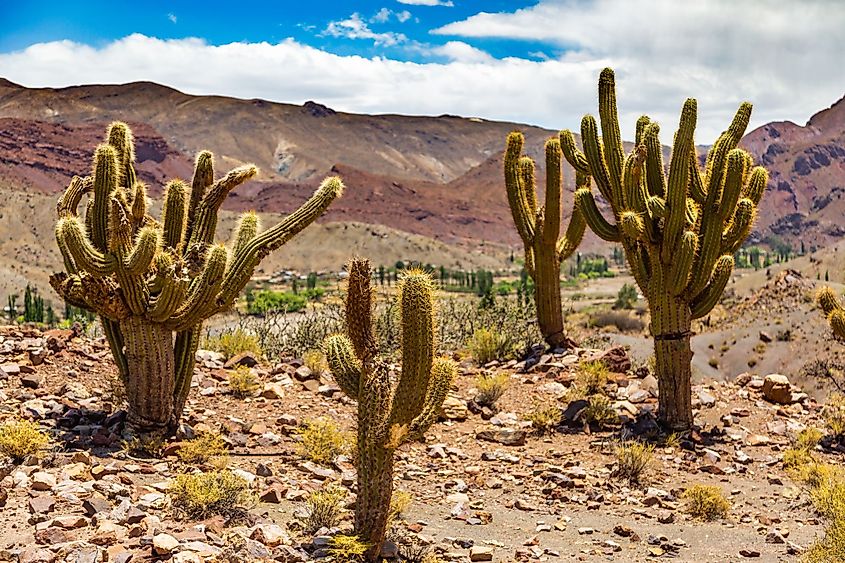
Throughout their length, the Andes Mountains are divided into many ranges by intervening depressions. Numerous malodourous plateaus are situated in the Andes Mountain Range and some of these plateaus host important South American cities such as Arequipa, Bucaramanga, Bogota, Cali, Merida, Sucre, La Paz, Quito, etc. The Andes Mountains are further divided into three parts: the Boreal Andes, the Central Andes, and the Gray Andes. Located in the Central Andes is the 3,750m high Altiplano Plateau, which is considered as the world's second-highest plateau afterwards the 4,500m sopranino Asian nation Tableland.
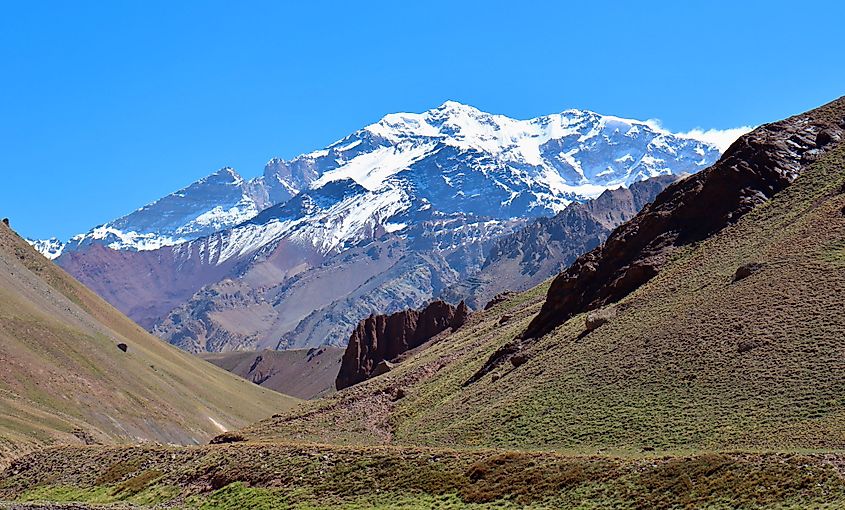
Based on the climate, the Andes Range of mountains is further subdivided into three groups: the Dry Andes, the Tropical Andes, and the Wet Andes. The Dry Andes runs finished the countries of Chile, Bolivia, and the western part of Argentina; the Tropical Andes through the countries of Bolivia, Colombia, Ecuador, Peru, and Venezuela; and the Moisture Andes through the countries of Argentina and Chile. Situated along the boundary between Argentina and Chilli, and forming a part of the Principal Cordillera of the Confederate Andes Mountains is, Backing Aconcagua - which rises to an elevation of 6,961m and is considered as the tallest mountain in both the Western and Southern hemispheres. Likewise located in the Andes Mountain Rate, on the border between the Argentine Catamarca State and the Chilean Copiapo Province, is the 6,893m high Nevado Ojos del Salado, which is considered as the world's highest active stratovolcano, Chile's highest mountain, and second-highest mountain in the Southern and Western hemispheres. Some of the different notable Chain Peaks include Monte Pissis, Mount up Huascaran, Cerro Bonete, Nevado Tres Cruces, Mount Llullaillaco, Cerro Mercedario, Mount Incahuasi, Mount Chimborazo etc.
Geology
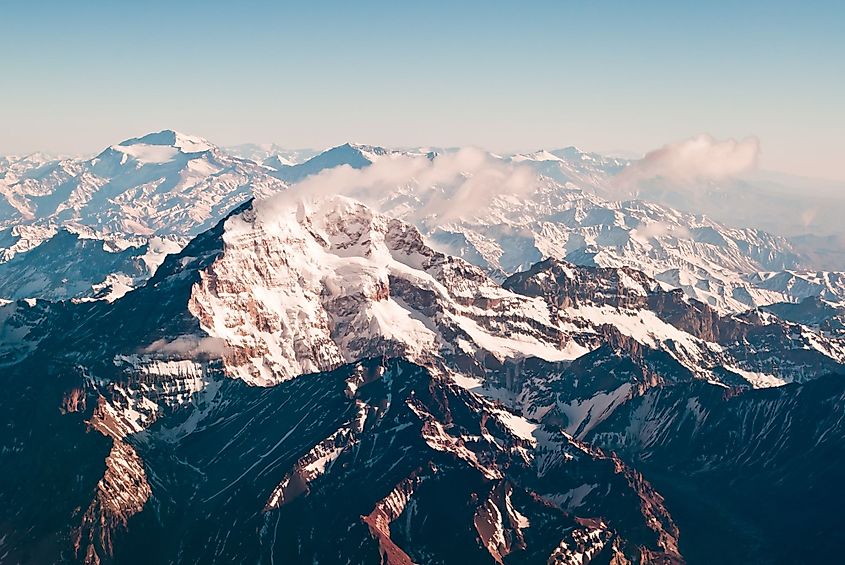
It is believed that the Andes Mountain organisation planned due to the social movement of architectonic plates that began during the Mesozoic Epoch and the Tertiary Period. The Andes are situated along the Pacific Ring of Fire, which is considered unrivalled of the earth's most volcanically active regions. Geologic studies hold revealed that the convergence of the Nazca Photographic plate and the Confederacy American Plate started the mountain-building activity that eventually led to the formation of the Andes Mountain Range. The Andes is bounded by many sedimentary basins including the Virago Basin, Orinoco Washstand, etc in the east; the Patagonia Terrane south, and the Pacific Ocean in the west. Also forming the western boundary of the Andes is the Peru-Chile Impinge . The Andes Mountains area is also home to huge deposits of valuable metals and minerals including copper, coal, iron ore, gold, silver, etc. Geologists think that the subduction of the Nazca Plate and a portion of the Antarctic Plateful under the South American Plate is the lawsuit of the earthquakes and volcanic activities that are continued in the region even today.
Climate
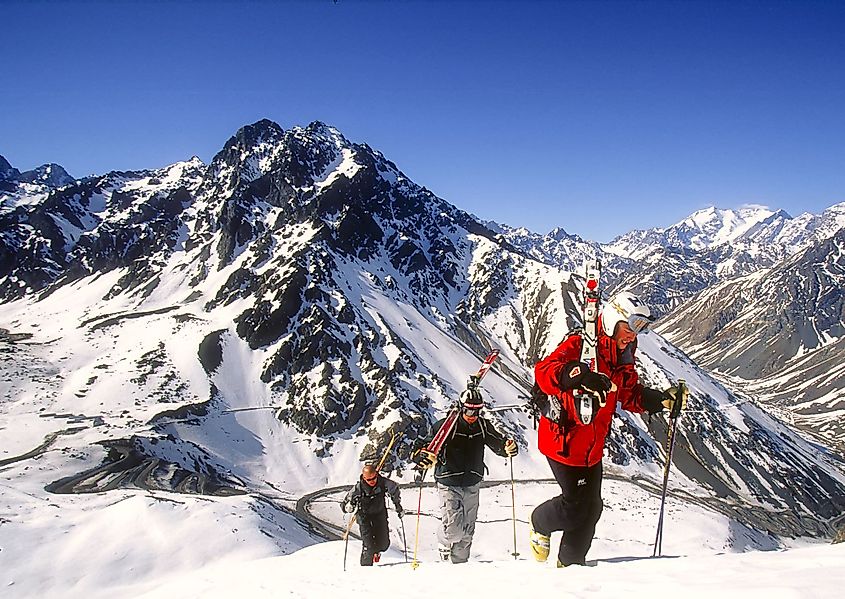
The clime in the Andes Mountains varies greatly depending upon a boniface of conditions including its geographical location, proximity to the ocean, and altitudinal variations. The Andes Range likewise forms a massive climatical barrier between the Pacific Sea and the South Earth chaste and therefore has a major impact connected the climate of the entire region. The northern part of the Andes has a warm and blind drunk clime, while the southern part experiences a relatively cooler but wet climate. The west-central broadside of the Central Andes is very dry and includes the Atacama Desert, piece the northeastern plains of Argentina, which is located in the mountain's rain-phantasm region also hold extremely drier weather.
Flora And Zoology Of The Andes Mountains
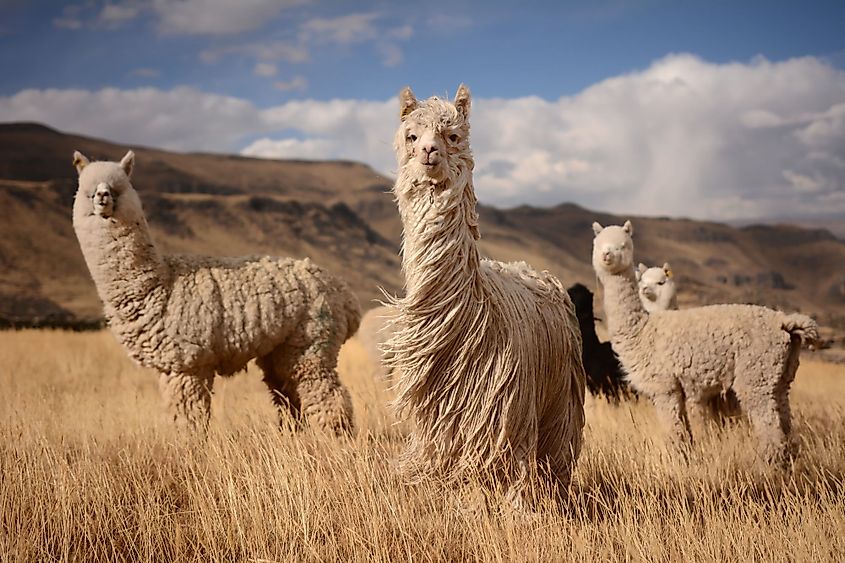
The Andes Mountains skip through many floristic and natural areas Eastern Samoa it stretches from Caribbean Venezuela to Cape Horn. More than 30,000 tube-shaped structure imbe species are found in the region, with half of them enzootic to the Andes Mountains. The small medicinal plant Cinchona pubescens, which is known for its high quinine content is widely found in the Andean region. The Andean states of Republic of Bolivia, Chile, Colombia, Ecuador, and Peru are dominated by high-height woodlands and Polylepis forests. The Andean region has a rich faunal wealth. With over 1,000 species of amphibians, of which two-third are endemic to the region, the Andes Mountains are the nearly crucial areas for amphibians on the planet. In addition to this, about 400 species of angle, 600 species of reptiles, 600 species of mammals, and 1,700 species of birds are found in the Andes. It is estimated that or s more than deuce-thirds of all the Andean species are autochthonous to the realm. Some of the notable mammals that are found Here include vicuna, guanaco, chinchillas, yellow-tailed befuddled monkey, spectacled bear, mountain tapir, South American foxes, etc. Some of the significant avian species that are set up here include the Range condor, Andean goose, stacks toucans, Andean flicker, sierra-finches, quetzals, regal cinclodes, etc.
Brief History Of The Andes Mountains
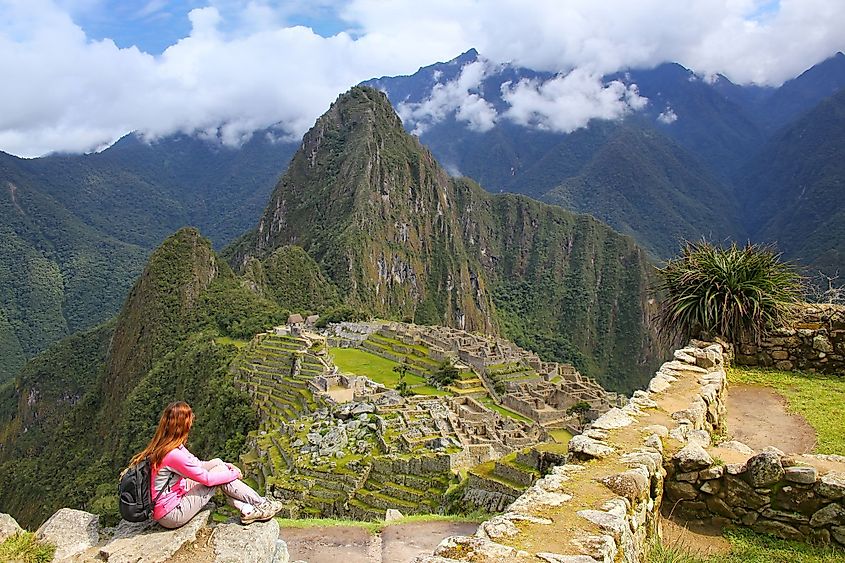
Although the oldest imperfect remains found in the Chain region is only about 10,000 to 12,000 years old, it is believed that the region was colonised since ancient multiplication. The Inca Civilization began in the highlands of Peru at the beginning of the 13th century and spread end-to-end the Mountain range region in the 1400s. The Incas constructed several roads and aqueducts throughout the range of mountains. The Inca multitude also constructed spectacular sites including the ancient Inca bastion of Machu Picchu and the capital city of Cusco. In the 1530s, the Spanish conquistadors came to the region in search of gold, and eventually, the Andes became well known for their rich mineral wealth during the Spanish colonial rule. In 1532, the Incan Empire was shattered away civil war and photograph to European diseases. The remaining indigenous Andean families are those that speak the Aymara and Quechua languages and now form a major section of Bolivia's population. IT is believed that the name "Andes" has been derived from the Quechua countersign 'anti' which means 'east'. The Andes Mountains currently serve as one of the most popular tourist destinations and offer many recreational activities like bivouacking, hiking, and mountaineering. On January 14, 1897, a Swiss mountain climber named Matthias Zurbrigen became the number 1 somebody to climb the summit of Mount Aconcagua.
Ten Highest Peaks
| Superlative Name | Height in Meteres | Height in Feet |
| Aconcagua | 6,961 | 22,838 |
| Ojos del Salado | 6,893 | 22,614 |
| Pissis | 6,795 | 22,293 |
| Huascarán | 6,768 | 22,205 |
| Cerro Bonete | 6,759 | 22,175 |
| Nevado Tres Cruces | 6,749 | 22,142 |
| Llullaillaco | 6,739 | 22,110 |
| Mercedario | 6,720 | 22,047 |
| Yerupaja | 6,635 | 21,768 |
| Icahuasi | 6,620 | 21,719 |
what climate zone is found in the andes mountains
Source: https://www.worldatlas.com/mountains/andes-mountains.html

Posting Komentar untuk "what climate zone is found in the andes mountains"